What a wonderful gift -the gift of food!

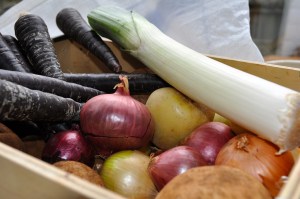
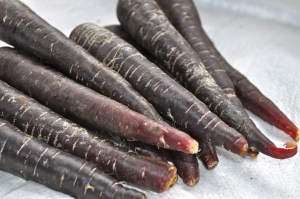
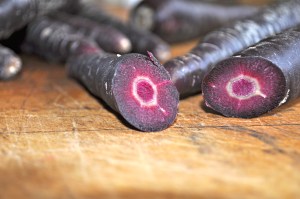
My daughter excitedly presented me with a beautiful bunch of elegant purple carrots which I was equally excited to receive. In times recent, they’ve been difficult to find but thankfully now are much easier to source. Purple carrots are probably one of the very first modified foods. Thousands of years ago the humble carrot was originally purple, but in the 1500’s Dutch farmers, through manipulation, created carrots in the colour orange. One of the group of veggies given the title of heirloom, the purple carrot could easily have been lost and forgotten. As with many “old foods” we are rediscovering their medicinal properties and their value in that regard. For example, purple carrots contain ‘anthocyanins’ which has anti-inflammatory, antioxidant, anti-carcinogenic and antimicrobial properties. As such purple carrots are said to be helpful in the fight against various diseases such as cancer, diabetes, heart disease, neurological diseases and bacterial infections.
If you feel the need to read more about the history of carrots, visit http://www.carrotmuseum.co.uk or http://www.purple-carrots.com
So what to do with these regal coloured vegetables? What not to do with them is certainly don’t boil them! If you intend to peel them be prepared for stained hands – you will quickly see why they are used as a natural dye! It’s probably a good idea if you’re trying them for the first time, to simply steam them to experience the true taste of these carrots. Although similar to the common orange carrot, you will notice a sweetness and earthiness most like fresh beetroot. Magnificent roasted as well as pureed, I have also seen them added to cake batter (giving a dirty blueberry hue to the cooked cake). When grated and put into coleslaw, the juice from the carrots gives the dressing a unique pinky purple tinge. Purple carrot juice – something we’ve had in our fridge for quite a while – is delicious but ultimately we use it for it’s positive health benefits. So there is nothing you can do with an orange carrot that you can’t do with a purple one – and vice versa.
 seek go eat